

What is an all-day grazing menu?
All-day grazing menus offer aged care residents the flexibility to eat what they want, when they want, rather than being limited to set mealtimes. An all-day grazing menu features a variety of smaller, nutrient-dense options such as finger foods, mini meals, smoothies, and snacks. These are all available at any time throughout the day.
This approach recognises many older adults have smaller appetites or prefer to eat little and more often. By providing appealing choices at any time, aged care chefs can support nutrition intake, reduce food waste, and create a more relaxed, person-centred dining experience.
Unilever Food Solutions consulted with Encara’s expert dietitian Xinhui Chung about how all-day grazing menus not only benefit residents, but also help satisfy Standard 6: Food and nutrition, in the new Aged Care Quality Standards.

Supporting choice and wellbeing through food
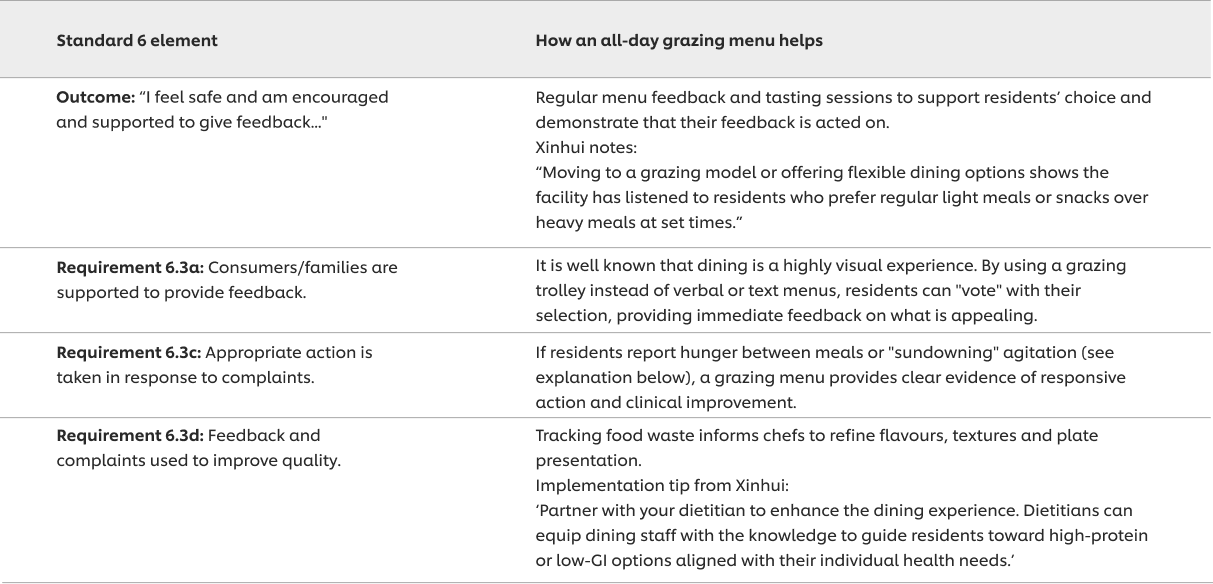
An all-day grazing menu can strongly support the Standard 6 outcomes and several key requirements of Standard 6 when it is designed and reviewed with residents’ input.
The table below links practical aspects of grazing menus to these outcomes.
Designing a full-flavoured, nutritional all-day grazing menu
When designing these menus, a key focus should be on prioritising nutrient-dense foods. Because grazing portions are smaller, every bite must count. Xinhui suggests “fortifying” snacks naturally by using ingredients such as full-fat dairy or protein-enriched sauces, to ensure residents can meet their nutritional requirements even with small volumes of food.
To help stimulate appetite, aromatic appeal is essential. As taste buds can decline with age, Xinhui recommends using high-impact aromatics such as garlic, ginger and fresh herbs. She states: ‘Residential aged care homes report excellent results using a visual grazing trolley that brings food directly to residents. Seeing the food acts as a powerful appetite trigger, particularly for those who may struggle to process verbal choices, while also giving residents the autonomy to select what they would like to eat.’
Small changes, big impact
Xinhui has also observed that a "Late Night Bite" station with warm milk and protein snacks can reduce the need for PRN sleep medications, as residents feel more settled.
From a clinical perspective, Xinhui goes on to say:
“When blood sugar levels drop in the late afternoon, the body releases stress hormones like cortisol. For some aged care residents this "biological stress" often manifests as increased agitation or "sundowning."
When a person has adequate, high-quality food intake throughout the day, they are much better equipped to handle the sensory confusion that comes with dusk.
By making sure they aren't hungry by dinner time, we also remove the stress of having to eat during their most difficult time of day. This is why I focus so much on making sure people eat the bulk of their protein and energy foods before they get agitated.
Essentially, a "well-fed brain" is a calmer brain.”
Tips for texture-modified diets
It is important to consider residents on texture-modified diets and include appropriate meal options in the menu, particularly for those on IDDSI Level 4 to 7.
Flavour symmetry: If the regular menu offers a mini lemon cake, ensure that an IDDSI Level 4 resident has an equivalent option on the trolley, such as a smooth lemon-infused mousse. This preserves dignity and inclusion.
Moulding for dignity: For Levels 4 and 5, use food moulds to present pureed foods in familiar shapes. This visual cue is vital for stimulating the "cephalic phase" of digestion, helping prepare the body to eat.
An all-day grazing menu may offer aged care providers a way to support Standard 6, encouraging choice, dignity, and wellbeing through food.
With dietitian-led oversight and resident feedback, grazing menus can help ensure individual nutritional needs are met, and individual preferences are considered throughout the day. For aged care chefs and care teams, this approach can contribute to a superior dining experience that reflects person-centred care, one that nourishes both body and mind.

FAQs:
1.What are the key compliance changes from 1 November 2025?
The strengthened standards introduce a new level of compliance and increased scrutiny, with providers audited every three years from November 2025 and a staged rollout across providers. Initially, the Commission expects good-faith efforts backed by documented evidence.
2. If we’re unsure what to do first for Standard 6, where should we focus?
Prioritise resident choice and control over food and mealtimes; set up clear, easy feedback channels with documentation; and ensure leadership/governance buy-in so dining practices can change to meet Standard 6.
3. How can we improve intake and uphold consumer dignity alongside Standard 6?
Add a late-evening “supper” to close the long overnight gap; design menus with multiple choices at every eating occasion, and manage allergen risks through clear communication, resident choice, qualified support when risks are accepted, and thorough documentation.

Disclaimer: The content of this article is created for inspiration purposes only. It is not intended as clinical, medical or nutritional advice.