The International Dysphagia Diet Standardised Initiative (IDDSI) is a global framework for standardising the texture modification of foods and drinks for people with swallowing difficulties (dysphagia). It has replaced the previous categorisation of texture modified food; soft diet, minced and moist, pureed, with a consistent scale, numbered 7 (the least modified) through to 0 (the most modified).
It is designed to minimise the risk of serving food at the wrong texture to residents or people living with dysphagia or other swallowing difficulties.
IDDSI framework
The IDDSI framework (the Standard) provides a common language to kitchen and care staff, speech pathologists, dietitians and family members, to describe the 7 different texture levels.
- Foods: Levels 7–3, from liquidised through to regular, easy-to-chew food.
- Drinks: Levels 4–0, from thin liquids through to extremely thick.
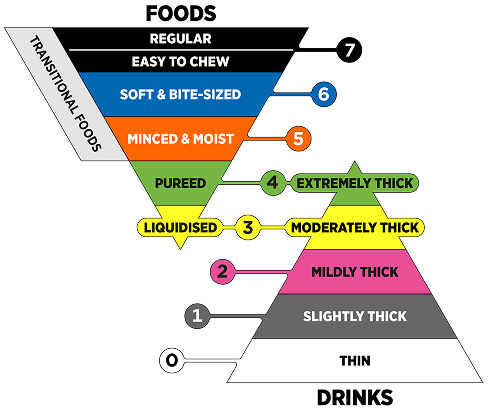
IDDSI was also designed to make texture modification easier in aged care kitchens by providing the testing methods that do not require specialist equipment or complicated skill sets. Food service staff can use basic items found in all kitchens, such as spoons, forks, and/or chopsticks to assess the texture of the food by a simple observation in everyday conditions.
Each level has defined testing methods (such as the fork-drip and spoon-tilt tests) so texture can be checked consistently using simple tests with common kitchen items.
IDDSI test videos
Level 7 Regular / Easy to Chew - there is no iDDSI test for this level




Levels 3 - 0 - These levels are liquids at decreasing degrees of thicknesses and use the Flow Test. To understand the difference between the 3 levels, view the Flow Test Comparison video
All IDDSI testing methods can be viewed here and are available in multiple languages.
Nutrition, appetite and the dining experience
Texture-modified meals need to be nutritious and visually appealing so the dining experience is just as enjoyable as it is for those eating non-texture-modified meals. Presentation, flavour, and variety matter just as much for residents on texture-modified diets as they do for anyone else. Well-designed texture-modified dishes support safety and wellbeing while enhancing the overall dining experience.
It is not uncommon for people with dementia to also experience dysphagia. For these residents, ensuring the food on a plate is recognisable; with the appropriate shape and colour, is essential regardless of the texture level required. This helps make meals more familiar, appealing and enjoyable.
Learn more about the presentation of texture modified meals here: Texture modified meal presentation techniques.
IDDSI and the Aged Care Quality Standards
IDDSI complements the Aged Care Quality Standards. Aged care homes are expected to demonstrate that texture-modified diets are prepared and tested correctly, and increasingly this is checked through documentation and spot audits.
IDDSI also helps give chefs greater meal options for those on texture modified diets with foods that lend themselves to texture modification at the different levels. Providing multiple options for residents at meal times helps to satisfy the criteria around choice in Standard 1 and Standard 6.
Getting IDDSI right
With IDDSI now used in most aged care kitchens, there are common success markers which indicate how well IDDSI is being applied:
- Terminology
All staff are using a common language when talking about texture modified meals that is aligned with the global IDDSI terminology.
- Consistent batches
The techniques have been mastered so every meal produced at a specific IDDSI level is consistent and there are no variations due to temperature changes, additional fortification or unreliable testing procedures.
- Whole meal modification
Each element of the meal must meet the IDDSI testing criteria. This includes side dishes such as salads and vegetables as well as sauces, gravies and condiments.
- Training
One of the most effective tools for IDDSI implementation has been the consistent and thorough skills training for all staff involved in food service in aged care. Providers who have committed to IDDSI excellence have implemented ongoing training across all aspects of food service; from clinical staff, cooks, chefs, dining assistants and casual staff.
Getting IDDSI right is an ongoing process of rigorous training and skills updates for everyone involved. It is an integral part of food planning and preparation in aged care kitchens.
IDDSI checklist:
Testing and preparation
- Test every element of every meal against IDDSI criteria including mains, sides, sauces, and desserts.
- Use standardised recipes with exact thickener quantities, resting times, serving temperatures and preparation steps.
- Retest after any changes to temperature, fortification or ingredient batch, as these can all affect texture levels and puree consistency.
Matching residents to the right meal
- Confirm each resident's current IDDSI level against their care plan before service, not from memory or habit. Integrated digital systems significantly improve visibility and currency of information.
- Label plates, trays, and containers clearly with IDDSI level and terminology to prevent mix-ups at service and handover.
- Flag texture requirements alongside allergies and other dietary needs, so they're checked together, not separately.
Staff and training
- Train all staff involved in food service; chefs, cooks, casual and relief cover, dining assistants, and clinical staff.
- Reassess staff competency periodically, and refresh training when new menus are implemented.
- Use IDDSI terminology consistently in verbal handovers, written documentation and reporting so there is no ambiguity or confusion.
Working with clinical staff
- Ensure there are clear lines of communication between speech pathologists and dietitians, food preparation staff and the food service team so everyone is aware of changes or adjustments to a resident’s needs in real time.
- Establish a clear process for updating kitchen records promptly when a resident's level changes.
Quality assurance
- Review feedback about texture-modified meals as part of continuous improvement.
- Periodically audit menus for IDDSI compliance.
- Keep records of testing results for internal quality checks and external audits.
Getting IDDSI right means giving residents more choice and making meal times safer.
Resources
IDDSI resources
For up-to-date information and the correct testing methods, go to IDDSI.org, the international official IDDSI site.
IDDSI framework
IDDSI resource centre
IDDSI testing methods
Re:fresh resources
We developed five recipes at IDDSI levels 4-7 for aged care chefs


Disclaimer: The content of this article is created for inspiration purposes only. It is not intended as clinical, medical or nutritional advice.