Posted on Tuesday, 22ⁿᵈ April, 2025
There’s always plenty of discussion around the pressures facing hospitality operators, but much of it focuses on the big issues that individual chefs, kitchens and venue owners have little control over.
So, let’s zoom in.
When service pressure ramps up, it pays to call on menu items that provide less complexity, less waste and less strain on the kitchen, all while maximising customer satisfaction.
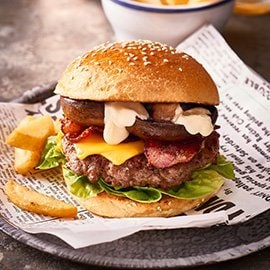
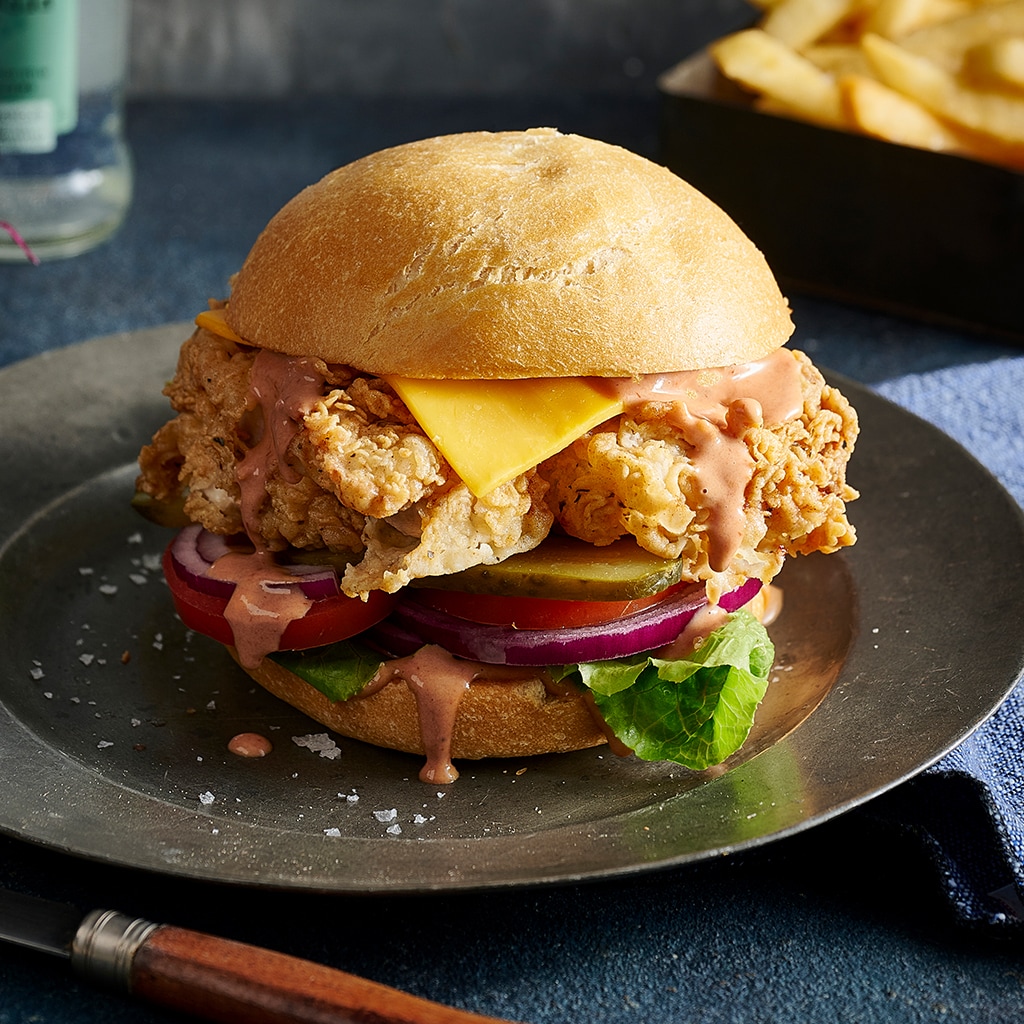
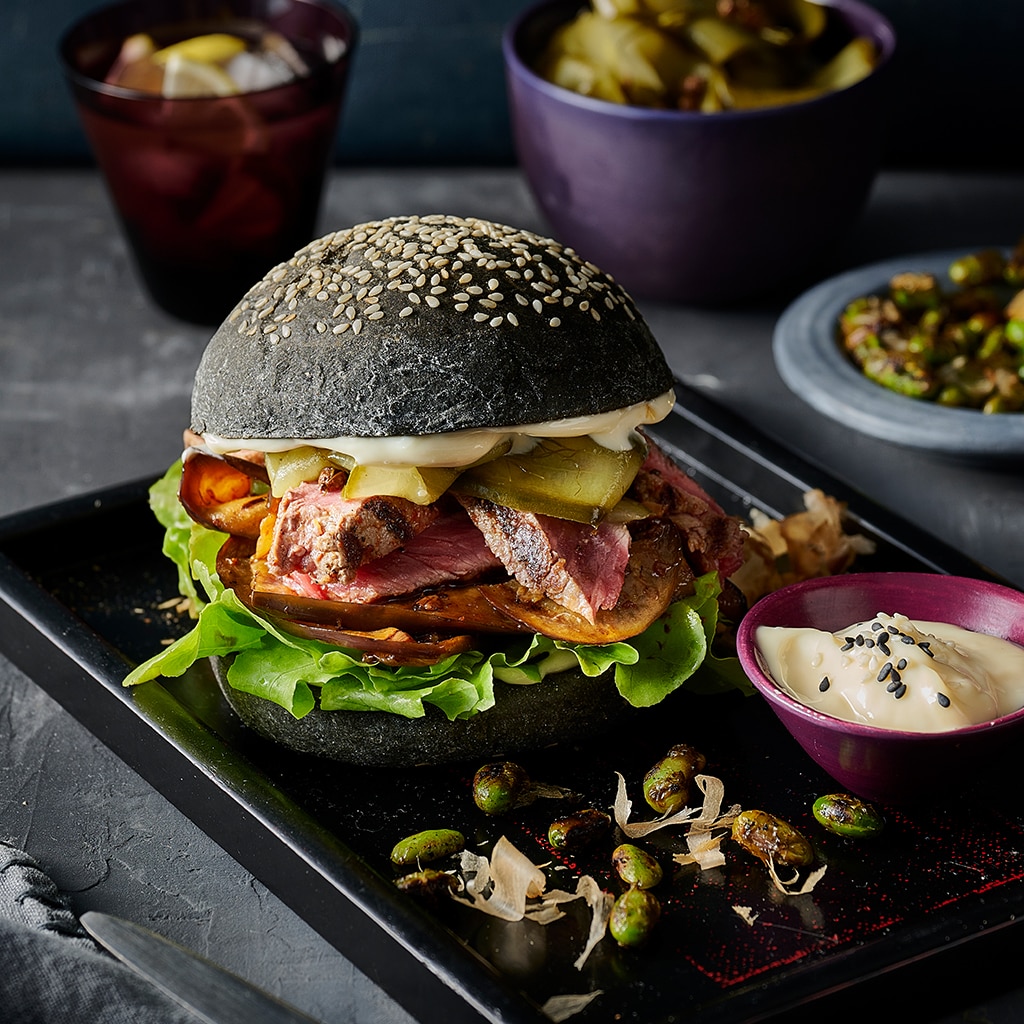
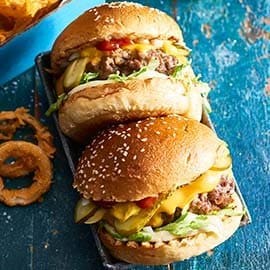
That’s exactly why burgers remain one of casual dining’s most dependable performers. They’re universal crowd-pleasers, endlessly versatile and highly scalable. They can be prepped efficiently, built quickly and adapted easily to suit different dietary needs, flavour profiles and price points. Better still, with the right systems in place, burgers deliver the consistency and speed that busy service demands.
To celebrate World Burger Day on 28 May, here are 6 practical ways to keep your burger service firing when it matters most!
1. Build from a blueprint
The busiest kitchens create systems based on efficiency and predictability.
A well-structured burger menu is built around a small number of core components that can be used across multiple builds:
- one or two patty formats
- a shared bun range
- core cheeses
- two or three hero sauces
- common garnish sets
- a buildable base sauce.
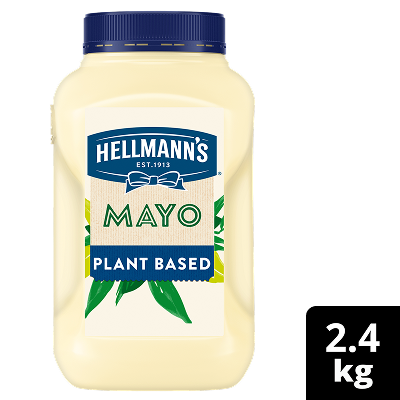
For example, instead of carrying six separate sauces, consider how a single mayonnaise base can deliver multiple flavour profiles—think chipotle, garlic herb or tangy burger sauce—with minimal extra prep. Or go further and create your sauces around a quality plant-based mayonnaise, so that you don’t have to change bases for vegans and vegetarians.
This kind of thinking simplifies ordering, reduces stock complexity and helps staff cook with confidence. The fewer moving parts your kitchen manages, the smoother service becomes.
2. Prep for peak periods
One of the most common service chokepoints occurs when a kitchen isn’t prepared for diners arriving in large numbers all at once. Ahead of key service windows:
- pre-portion patties
- slice cheeses and garnishes
- portion sauces into bottles
- locate buns for quick access
- pre-toast if practical
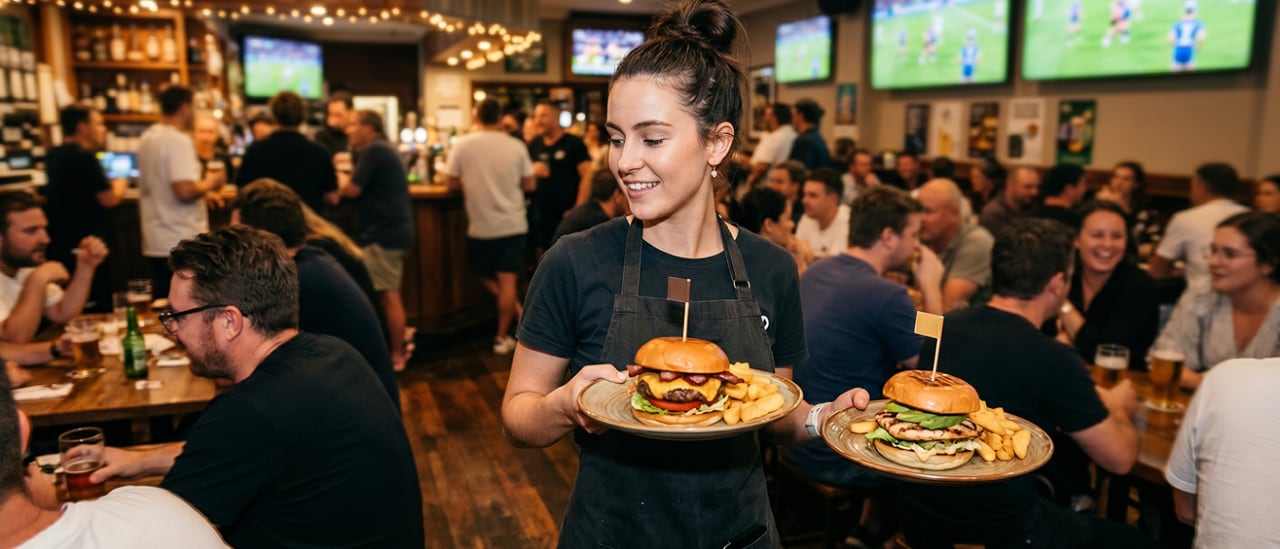
For venues with predictable game-day spikes, this becomes even more important. If your footy crowd lands 45 minutes before the bounce, your kitchen should be set for immediate service, with a goal of removing friction when the orders flood in.
3. Treat sauces like service accelerators
Sauces can be an afterthought operationally, but they’re one of the simplest ways to increase consistency and speed.
A quality mayonnaise-based sauce offers strong cling, minimal water loss and excellent coverage. Operationally, this matters. When sauces hold their structure, burgers stay intact for longer and eat better once they hit the table.
Pre-batched sauces also reduce assembly time. Rather than building flavour burger-by-burger, create signature sauces ahead of service and bottle them for fast, precise application.
4. Engineer your menu for margin and movement
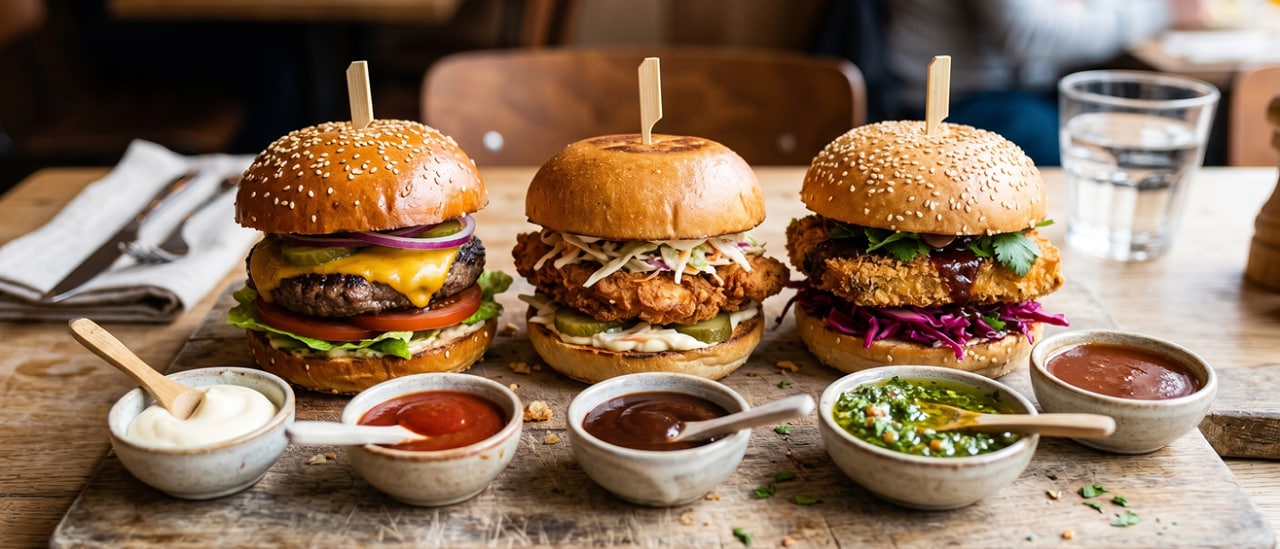
Not every burger needs to be complex. A smart menu balances premium stacks with simpler, high-turnover builds that keep service moving and margins healthy. You could think of your burger range like a team sheet:
The workhorses: Cheeseburgers and chicken burgers with broad appeal and fast assembly.
The crowd-pleasers: Loaded or limited-edition burgers that offer excitement and drive upsell.
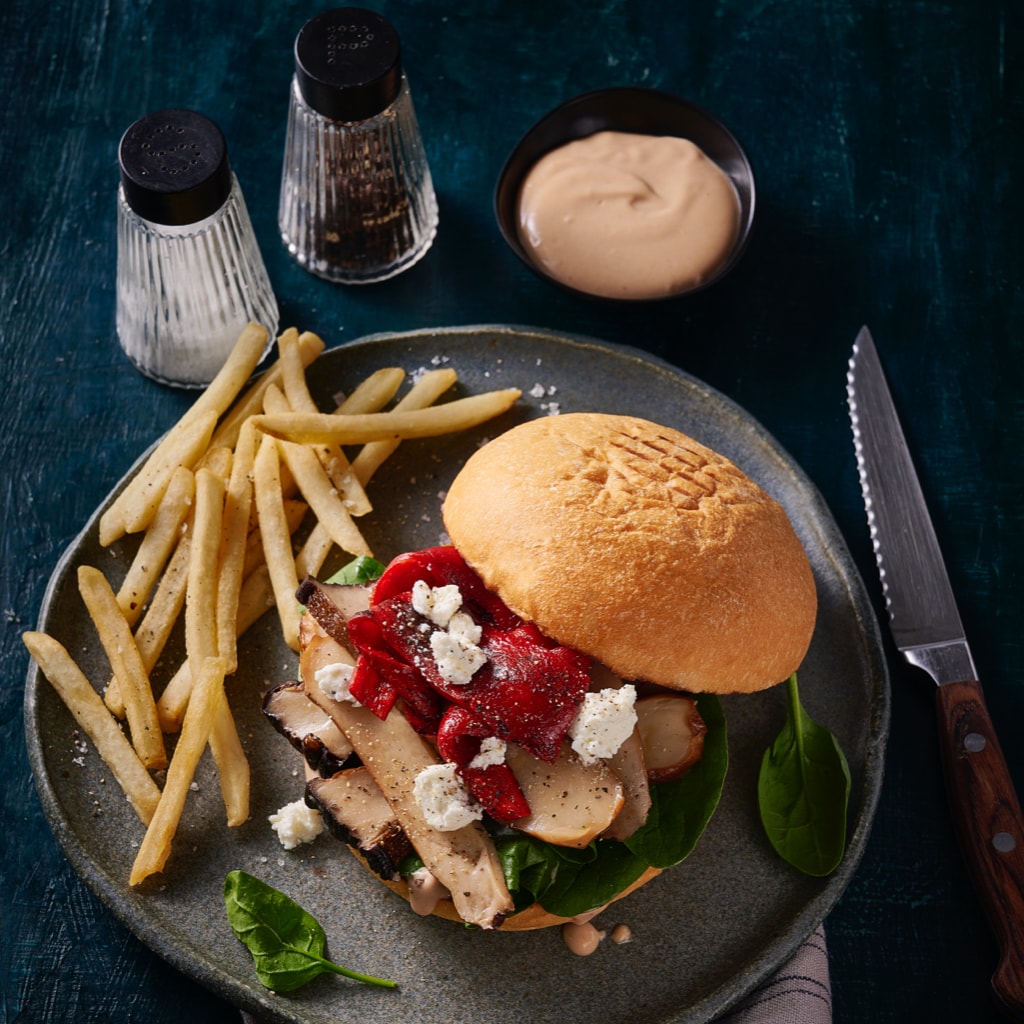
The specialists: Plant-based or dietary-friendly builds that broaden reach without overcomplicating service.
The simpler stacks anchor service speed while hero burgers create menu theatre. Done well, it’s a win-win for kitchen efficiency and customer choice.
5. Make yield work harder
A canny burger menu uses ingredients already working elsewhere in the kitchen, which is a great strategy for driving down waste. That might mean:
- slaw shared with schnitzels or tacos
- pickles, lettuce and avocado used across bowls and sides
- sauces doubling as dips
- protein trims repurposed for loaded fries.
Cross-use reduces spoilage, simplifies ordering and improves purchasing efficiency. It also gives kitchens flexibility when stock fluctuates.
6. Build burgers for real-world service
A burger that looks brilliant in development but collapses during service isn’t doing you any favours. The best-performing burgers are designed for how people eat them: quickly, socially and often with a drink in hand. That means:
- buns with enough structure to hold sauces
- balanced layering that prevents slide
- controlled moisture to avoid sogginess
- plating or wrapping optimised for easy handling
The goal is comfort and consistency, not complication. Put simply, burgers that are easy to hold and retain their quality from build to bite perform better operationally.
Get Real Between The Buns
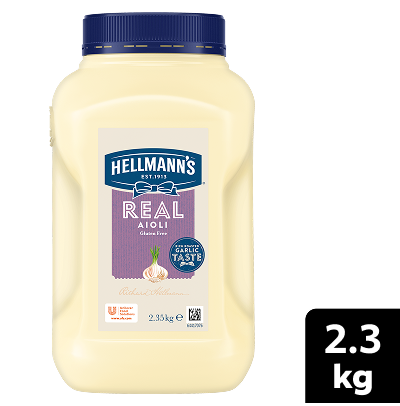
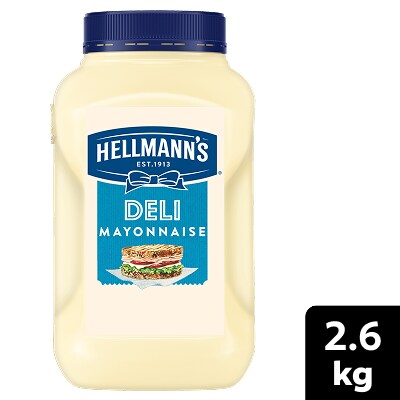
When every second counts, the best ingredients make service run smarter. That’s where a quality mayonnaise and aioli make all the difference.
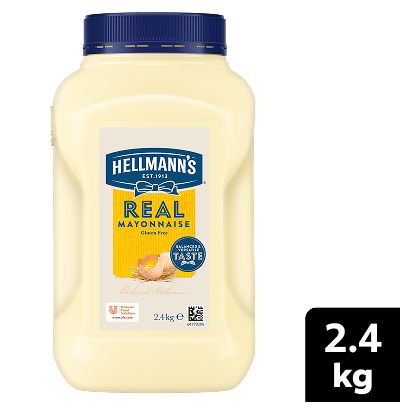
With superior consistency, excellent coating and minimal soaking on buns, Hellmann’s helps burgers hold their structure to deliver a better eating experience once the burger lands in your customer’s hands.
Made with real, simple and sustainably sourced ingredients, Hellmann’s provides the rich taste and creamy texture diners expect from a great burger. For kitchens, that equals confidence and consistency under pressure.
For burgers that perform when it matters, get real between the buns.